All Categories
Featured

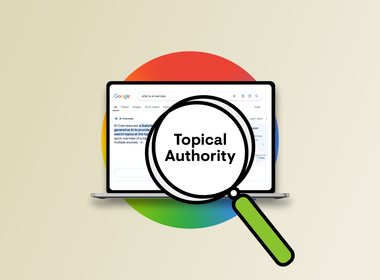
Developing Advanced Authority Systems for US Markets
Table of Contents
Agents based on big language models (LLMs) for maker learning engineering (MLE) can instantly execute ML designs through code generation. However, existing techniques to build such agents frequently rely greatly on inherent LLM understanding and utilize coarse expedition strategies that modify the whole code structure at the same time. This restricts their capability to pick reliable task-specific designs and carry out deep exploration within specific parts, such as exploring thoroughly with feature engineering choices.
MLESTAR first leverages external understanding by utilizing a search engine to obtain reliable models from the web, forming an initial service, then iteratively improves it by exploring various strategies targeting specific ML elements. This exploration is guided by ablation studies analyzing the effect of individual code blocks. We present an unique ensembling approach utilizing a reliable technique recommended by MLE-STAR.
At Google we use innovations like artificial intelligence (ML) to develop more useful products from removing email spam, to keeping maps as much as date, to using more appropriate search results. Chrome is no exception: We utilize ML to make web images more accessible to individuals who are blind or have low vision, and we likewise produce real-time captions for online videos, in service of individuals in loud environments, and those who are tough of hearing. Significantly: these updates are powered by on-device ML models, which means your information stays private, and never leaves your gadget. Safe Surfing in Chrome assists protect billions of devices every day, by showing cautions when individuals attempt to navigate to dangerous websites or download harmful files (see the big red example below).
Leveraging ML for Search Authority in the US
To further enhance the browsing experience, we're also evolving how people engage with web alerts. On the one hand, page notices help deliver updates from websites you care about; on the other hand, alert approval triggers can end up being an annoyance. To assist individuals browse the web with very little interruption, Chrome anticipates when permission prompts are unlikely to be given based upon how the user previously communicated with similar authorization triggers, and silences these undesirable triggers.
[target1:anchor_exact1]is changing the way we interact with the digital world. It gives systems the capability to gain from data and change to brand-new knowledge, opening a variety of potential in numerous industries. Device learning is the foundation for lots of recent developments, such as and It is changing how we live, work, and use innovation.
How Google Uses Maker LearningWe will take a look at in this article. We will take a look at how device knowing can be used to and. Through the evaluation of the current developments and breakthroughs, we will figure out the Table of Content is a subset of that enables computer systems to gain from information and make choices or forecasts without being clearly set.
Artificial intelligence's capability to "find out" is what provides it its power especially when dealing with complex patterns, high information volumes, or uncertain outcomes. There are Google utilizes artificial intelligence throughout a broad range of items and services, constantly pressing the boundaries of what is possible with AI. Below, we explore how Google uses ML to its numerous offerings: has altered so much with device knowing.
How to Establish Topical Authority With ML Systems
uses device learning to reveal relevant outcomes based on previous user habits even with never ever before seen search terms. In 2019, (Bidirectional Encoder Representations from Transformers) took it a step further and assisted the system comprehend context especially in natural language. It reads words in relation to each other and fine-tunes results based upon subtle analyses.
By analyzing enormous quantities of historical information and actual time inputs such as, and Google Maps predicts the finest routes. The addition of allows Maps to adjust and fine-tune its predictions in time. It gains from countless user interactions, considering things like andto recommend the best routes.
Over time, this feature adjusts based on the user's. To identify possible, Gmail's mostly uses.
Additionally, enhances by optimizing and focusing on relevant emails based on. Through and, helps the platform automatically classify images based on their content.
2026 Future of Automated SEO in the US
Leverages to boost by adjusting,, and, developing more professional-looking images with very little effort. By looking at patterns in, recognize content that aligns with private preferences.

Latest Posts
Optimizing B2B Writing Using High-Speed AI Tools

How Machine Learning Transforms Modern Search Logic

Scaling Corporate Content Through Advanced ML Workflows